Wednesday, September 28, 2011

Jerusalem: Truly multicultural and truly rich in history


Today, I took a moving and memorable ten-hour, private tour of both Jerusalem, and (Palestine Controlled) Bethlehem. What struck me most was how lush and green the countryside was; that we could see the 436-mile “security wall” from different locations; and as we entered Jerusalem, I was amazed by how densely populated the city is with neighborhoods tightly built up into the hillside. Of course, the imposing Temple Mount with its distinctive, glistening golden Dome of the Rock, one of the most sacred Muslim sites in the world, can be seen from every corner of the city. Because it is situated on a most holy Jewish site (Abraham almost sacrificed his son, Solomon built 1st Temple, and 2nd temple was built), its location is a source of never-ending conflict between Muslims and Jews.

Downtown Jerusalem is very congested and the streets are too narrow for the volume of traffic and not much better for pedestrians. Parking is a nightmare and many park right on the pavement. Fortunately, our small van was able to navigate the narrow streets that connect and surround parts of the old city. Our first stop was lookout point with spectacular panoramic views of the city, dominated by the breathtaking Dome of The Rock. Then, we drove along the Mount of Olives, of great importance to Jews, Christians, and Muslims, with shrines dedicated to all 3 religions. It houses the Jewish cemetery which is considered a most sacred burial ground for Jews worldwide, today. At the foot of the mountain, we visited the garden of Gethsemane, where Jesus was arrested and the Church of All Nations.

We could see panoramic views of Mount Zion from different points throughout the day.

Next, we headed for the Old City, walled in by ancient stone, containing the greatest concentration of all weaves of society, in a maze of winding streets. Included are the Jewish, Muslim, Armenian, and Christian Quarters, all filled with colorful markets, aromatic cafes, pungent restaurants, and pedestrian streets with nearby sounds of Jewish prayer at the Western wall, Catholic church bells ringing, and the call to Muslim prayer from muezzin--all within minutes of each other.

Here, we had tours of inside of the famous (and very crowded) Church of the Holy Sepulchre; Via Dolorosa (the path along which Jesus was forced to walk with the cross on his back—we visited stations 5, 6, & 7); the Western (“Wailing”) Wall; and through Arab Markets. I found the Western Wall, one of the Holiest Jewish sites in the world, most moving of all. I wrote a prayer and pressed it into a crevice of the wall. I must confess: I peeked at the men on the other side of the gender partition and photographed some of them. Of course, there side looked more interesting.

On Jerusalem: I love the co-existence of east and west, ancient and modern, secular and religious, and there are still even those who ride on donkeys, camels, and horses. Jerusalem’s residents come from more than a hundred ethnic and religious backgrounds. The ride ranging mix of people can be seen while walking down a street: a cassocked priest from an Eastern Orthodox Church, a black-veiled, abaya-clad Muslim woman, and an Ethiopian immigrant in flowing white robes, a black-garbed Orthodox Jew with beard and corkscrew curls, and an Indian immigrant in a colorful sari. All in one mosaic inside a 42-square mile radius.

Next, our Israeli tour guide, Ron, left our bus because he refused to stay on the bus as it moved into Palestine-controlled Bethlehem and because he did not wish to share space with our Palestinian tour guide. Despite his warnings, we felt very safe in Bethlehem and our Tour Guide, Samir, a Christian Palestinian, was a gentle and respectful soul. Of note, our Israeli tour guide made it clear he was NOT going to be politically correct and at one point even referred to some Arab children as maggots.

We were required to go through an official check point to enter Bethlehem. We strolled through the streets of Bethlehem to visit the Church of the Nativity, believed to be the birth place of King David and Jesus. For lunch, we dined in a small restaurant that gave us a choice between two delicious sandwiches: shawarma or falafel. Vendors followed us to the next stop (LOL) which was a large Christian gift shop. The official checkpoint leading back into Jerusalem (from the West Bank) was much more stringent with armed guards coming on board our van to check us out.

It was obvious we were spending time in a military states whose primary purpose is survival. Israel’s ports must be the most heavily guarded in the world. The port of Ashdod was flooded with military ships. Although I felt a bit uneasy before going there, I admit I felt quite safe.

I enjoyed the day and will visit New Jerusalem and several museums next time.

Rhodes, The Perfect Port City


Today, I visited Rhodes, a walled city that is the largest permanently inhabited medieval city in Europe. Rhodes is the name of the city as well as the Aegean island and consists of three different cities: ancient, medieval, and modern and the old town is a UNESCO World Heritage Site. Of course, it is best known for the Colossus of Rhodes, one of the seven Wonders of the Ancient World, that stood in the old harbor until it collapsed in an earthquake in 227 BC, after dominating the harbor for 56 years. It is also known for its splendid beaches and 300 days of sunshine a year.

As I left the ship, I noticed Hop On Hop Off Buses just outside the port entrance (stop #8). Although I had studied all the maps and planned to take a self-guided tour of the Old Town, I decided to begin my journey with an hour long scenic circuit of the entire city (including up to Monte Smith) atop the tour bus, listening to a guided lecture. As always, I learned a lot and succeeded in getting an overview of both old and new, I would not have been able to conquer on foot.

Once I was satisfied I had a nice overview, I descended the bus (at stop #6) close to the stop where I boarded and near the Old Town central market, adjacent to the knights quarter. This was the perfect starting point for my walking tour of the (mostly pedestrian-only) Old Town. The well-preserved old town is divided into 3 quarters: knights, Turkish, and Jewish. I explored all 3.

The Avenue of the Knights, Ipoton, is the main thoroughfare of the knights’ quarter. This street is lined with the imposing Inns, residences of Knights of the Order of St John, that are divided by linguistic affinity, from each of the 7 groups that occupied Rhodes. I saw the French, Spanish, and Italian Inns, all that house archeological and decorative arts museums. I will explore Rhodes’ many museums on my next visit.

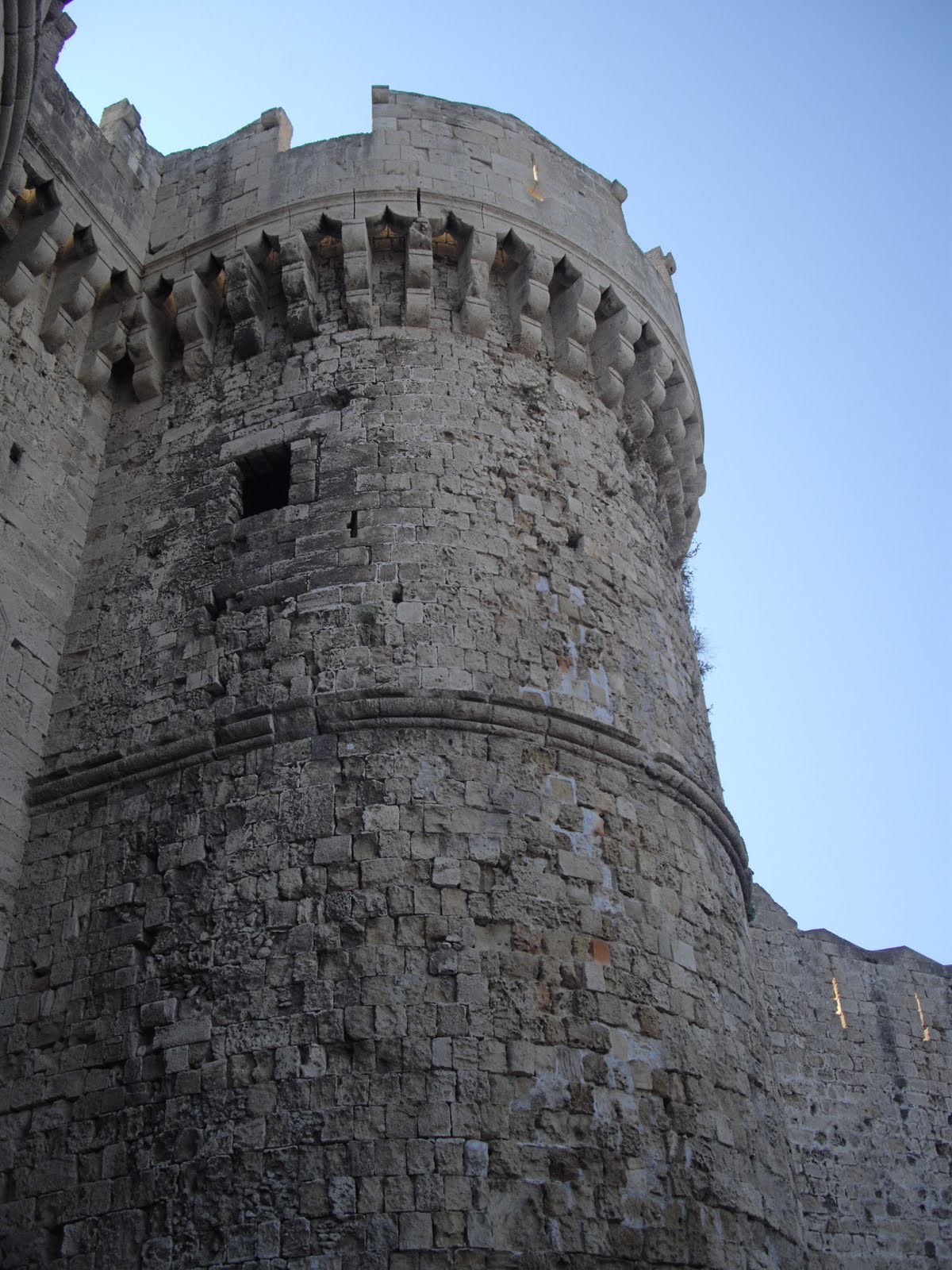
From here, I walked straight uphill to the Palace of Grand Masters, an imposing fort; built to be the last line of defense should the outer walls of the city be breached. Built on the site where the ancient Greek temple of Apollo stood, it was the residence of the Grand Master of the Knights, and where the Order assembled. After Rhodes fell to the Turks in 1522, it was converted to a prison and the palace was completely destroyed by an accidental explosion of stored black powder in 1856.

What is visible today as the Palace of the Grand Masters was rebuilt in the 1930’s based upon old drawings and it’s the complete reconstruction was undertaken to create the summer residence of Mussolini and King Victor Emmanuel III. Of note, it was never used for this purpose.

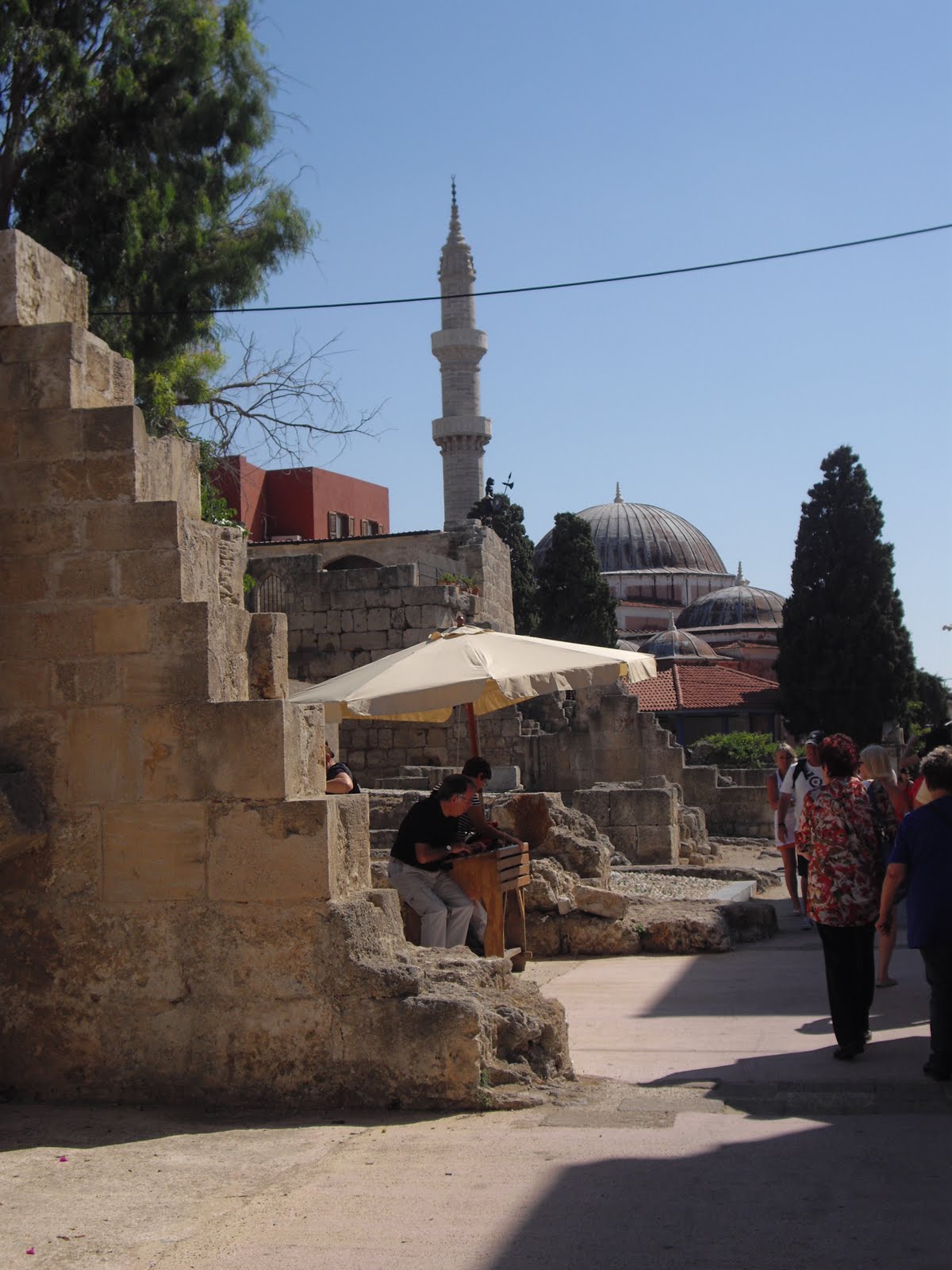
Next, I climbed the hill of the Mosque of Suleiman that was built soon after the Turks occupied the city of Rhodes in 1522 on the site of the destroyed Christian Church of the Apostles.

Just in front of the Suleiman Mosque is the old Turkish Bazaar that lines Sokratous Street, which is packed with tourists and a melee of shops that spill their wares into the street. I enjoyed exploring and bargaining. The shop owners are not annoyingly aggressive as in certain other cities.

Sokratous Street is a pleasant cobblestone street that is bound to be walked by every tourist who visits Rhodes. I took a slow walk through this street from the Mosque of Suleiman to the very lively Ippokratous Square which surrounds the Castellania fountain (birds are actually drinking from each of the faucets!!), and is framed by the old Chadrevan mosque on the west and the Palace of the Castellan on the east. All around, coffee shops and terraced-restaurants burst at the seams as they spill onto the street having completely covered the old buildings.

I returned to the ship to recharge my camera battery, find my ATM card, and grab lunch. I went back into Old Town for another 2 hours to explore more of the maze of nooks and crannies of this remarkably charming town.

When I return, I will take a trip to Lindos.

Tweet: Rhodes is the perfect port city: rich in history, U walk there from ship, it’s beautiful, it’s unique: a medieval walled-city & people smile

Chania, one of the most photographed cities in Greece


Today, I visited the city of Chania one of the most photographed cities in Greece. It is located on the island of Crete. I visited the charming old town with narrow, cobblestone streets; monuments and buildings dating to the 1500s, and a breathtaking harbor. The rain tried to ruin our day but did not succeed. You can see this in my photos.

Monday, September 12, 2011

Finally Ordered a Kindle to Lighten my Bookload


I cannot decide which novels and reference books to take on my trip, so I finally ordered a Kindle for my upcoming 13-day overseas vacation. I see I will have 3-G wireless access to ordering books in 100 countries—Italy, Greece, Turkey and Israel are included.

I downloaded the Kindle apps to my I-phone, desktop and laptop PCs. I have already ordered some history and travel books and downloaded them to my other devices. I look forward to using my new Kindle which should arrive in 2 days!!

Saturday, August 27, 2011

Travel Overseas With Ease


Join me as I provide suggestions on how to make the most of your first overseas trip by getting to know your destination culture BEFORE you go!

Sunday, July 10, 2011

13-night, 4-country cruise with Israel


I will take this wonderful 13-night cruise that visits Israel (my first time), Greece, Italy, and Turkey. I look forward to a relaxing and intellectually stimulating time and to chilling out in my balcony room on a great ship!

Here is the route:

Sept 20 depart from Rome, Italy
Sept 21 Sea day
Sept 22 Chania, Crete, Greece
Sept 23 Rhodes, Greece
Sept 24 Sea day
Sept 25 Jerusalem (Ashdod) Israel
Sept 26 Nazareth (Haifa) Israel
Sept 27 Sea day
Sept 28 Ephesus, Turkey
Sept 29 Athens, Greece
Sept 30 Sea day
Oct 1 Palermo, Sicily, Italy
Oct 2 Naples,/Capri, Italy
Oct 3 Back to Rome and Flight back to Miami

Wednesday, March 30, 2011

Granada and El Alhambra-Spain


Granada and the Great Alhambra “The Pearl Set in Emeralds”

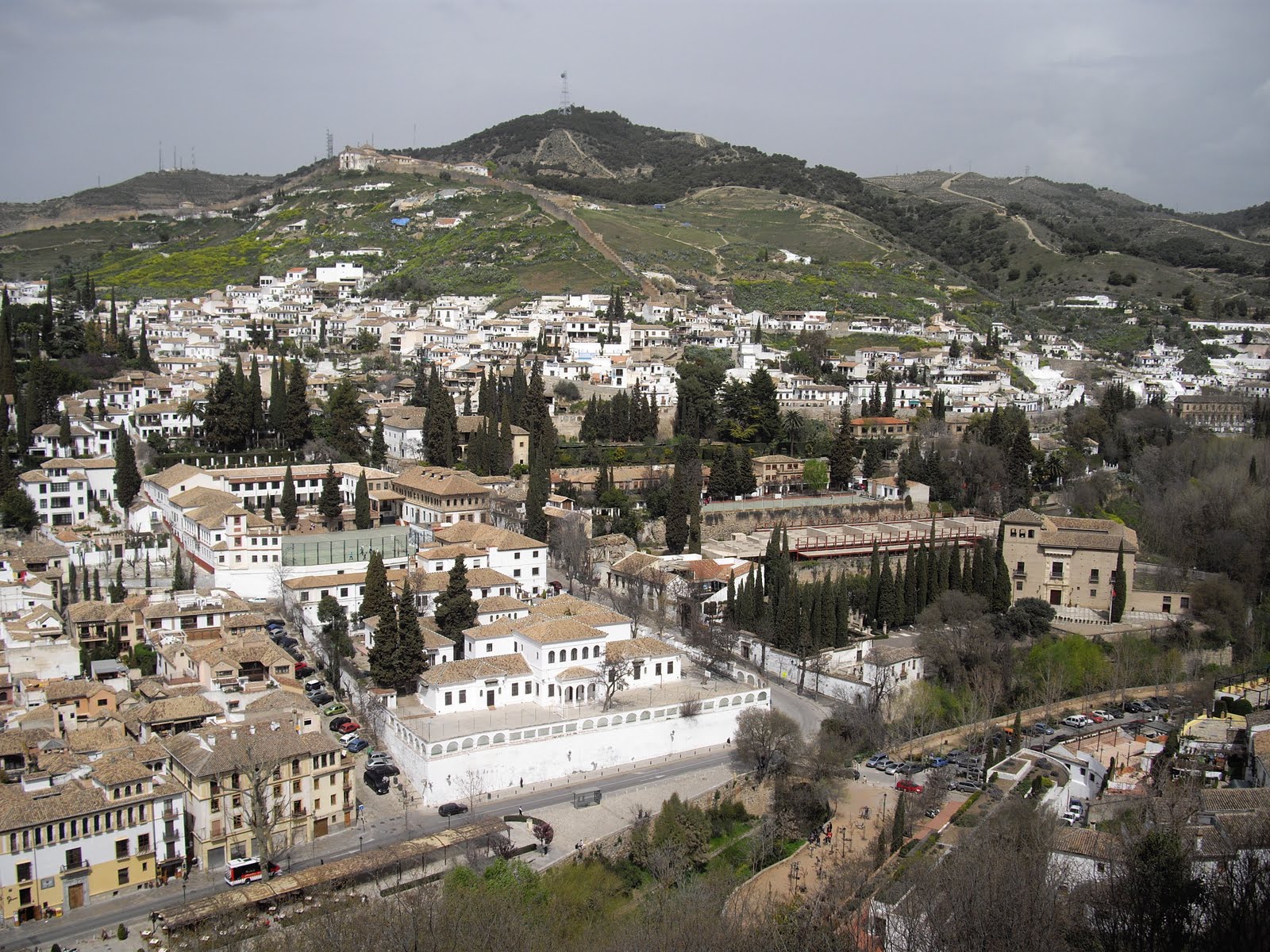
Today, we took a tour with SpainDaytours to visit The Magnificent Alhambra, a 1.5 hour drive from the port of Malaga, Spain.

The Alhambra palace, the greatest Moorish palace in Europe, was built for the last Muslim Emir during the mid-14th century.

The complex demonstrates the grandeur of the Moorish civilization of Andalusia with its signature features including busy stucco, plaster "stalactites," colors galore, scalloped windows framing hillside Granada views, exuberant gardens, and water, water everywhere. Water — so rare and precious in most of the Islamic world — was the purest symbol of life to the Moors-so, the Alhambra is abundantly decorated with water: standing still, cascading, masking secret conversations and drip-dropping playfully.

At one time, 2000 Muslims lived inside the Alhambra walls

The Alhambra in Four Parts

The Alhambra consists of four sights clustered together atop a hill: 1. The (Non-Moorish) Charles V's Palace (Christian Renaissance palace plopped on top of the Alhambra after the reconquest), 2. Alcazaba (fort with tower and views), 3. Palacios Nazaries (exquisite Moorish palace, (the jewel of the tour), and 4. Generalife (beautiful, lush gardens and summer palace).

1. Charles V's Palace
Conquering kings often built their own palaces over their foe's palace, and that's exactly what the Christian king Charles V did. The Palacios Nazaries wasn't suitable for Charles, so he built this new home, considered Spain's most impressive Renaissance building, on top of it. Charles' palace was designed to have a dome, but it was never finished. His son, Philip II, abandoned it to build his own palace, El Escorial. Yes, it’s another case of pure European royal greed and waste.
We visited the adjacent Museo de la Alhambra, showing off some of the Alhambra's best surviving Moorish art, along with one of the lions from Palacios Nazaries' fountain (under construction till 2012).

2. Alcazaba
The fort — the original "red castle" or "Alhambra" — is the oldest and most ruined part of the complex, offering spectacular city views. At one time, this tower defended a town (or medina) of 2,000 Muslims living within the Alhambra walls.
Of note, in the 19th century, Napoleon stationed his troops at the Alhambra, contributing substantially to its ruin when he left.

3. Palacios Nazaries, the Moorish royal palace
At 1:30, the entry time slot stamped on our tickets, we entered the jewel of the Alhambra: the Moorish royal palace, Palacios Nazaries, built primarily in the 14th century. We toured three basic sections: royal offices, ceremonial rooms, and private quarters.

We visited rooms decorated from top to bottom with carved wood ceilings, stucco "stalactites," ceramic tiles, molded-plaster walls, and filigree windows. Open-air courtyards in the palace feature fountains with bubbling water like a desert oasis, the Quran's symbol of heaven. The palace is well-preserved, but the trick is to imagine it furnished and filled with Moorish life...sultans with hookah pipes lounging on pillows on Persian carpets, tapestries on the walls, heavy curtains on the windows, and ivory-studded wooden furniture. The whole place was painted with bright colors, many suggested by the Quran — red (blood), blue (heaven), green (oasis), and gold (wealth). And throughout the palace, walls, ceilings, vases, carpets, and tiles were covered with decorative patterns, mostly calligraphy writing out verses of praise from the Quran.

As I wandered, I kept the palace themes in mind: water, no images, "stalactite" ceilings, and jagged pathways that zigzag (to prevent enemies from storming the place).

We toured Court of Myrtles (Patio de los Arrayanes); Boat Room (Sala de la Barca); Court of the Lions (Patio de los Leones); The Hall of the Ambassadors (Gran Salón de Embajadores); Hall of the Two Sisters (Sala de Dos Hermanas); the Hall of the Abencerrajes (Sala de los Abencerrajes); Court of the Lions (Patio de los Leones); and The Hall of the Kings (Sala de los Reyes)

Here are highlights of three of them:

The Hall of the Ambassadors (Gran Salón de Embajadores): During the 15th century, a visitor here would have stepped from the glaring Court of Myrtles into this dim, cool, incense-filled world, to meet the silhouetted sultan.

There is finely carved Arabic script throughout. Muslims are forbidden from making images of living creatures — that is God's work. Instead, they are allowed to display decorative religious messages. One phrase — "only Allah is victorious" — is repeated 9,000 times throughout the palace.

In 1492, two historic events likely took place in this room.

1.Culminating a 700-year-long battle, the Reconquista was completed here as the last Moorish king, Boabdil, signed the terms of his surrender before eventually leaving for Africa.

2.Columbus made his pitch to Queen Isabel and King Ferdinand to finance a sea voyage to the Orient, making his case that he could sail west to reach the East. Although most in the audience of the greatest minds from the University of Salamanca scoffed and called him mad, Queen Isabel said "Sí, señor."

Court of the Lions (Patio de los Leones): This patio, the Patio de los Leones, features a fountain that's usually surrounded by 12 lions. One of the lions is on display in the Museo de la Alhambra inside the Charles V palace, while the others were under construction.

Why did the fountain have 12 lions? Since the fountain was a gift from a Jewish leader celebrating good relations with the sultan (Granada had a big Jewish community), the lions represent the 12 tribes of Israel. During Moorish times, the fountain functioned as a clock, with a different lion spouting water each hour. (Conquering Christians disassembled the fountain to see how it worked, and it's never worked since.)

Washington Irving Room: We visited the room marked with a large plaque “where Washington Irving wrote Tales of the Alhambra”. While living in Spain in 1829, Irving stayed in the Alhambra. His "tales" re-kindled interest in the place, causing it to become recognized as a national treasure. A plaque on the wall thanks Irving, who later served as the US ambassador to Spain (1842–1846). Here's a quote from Irving's "The Alhambra by Moonlight": "On such heavenly nights I would sit for hours at my window inhaling the sweetness of the garden, and musing on the checkered fortunes of those whose history was dimly shadowed out in the elegant memorials around."

Washington Irving is virtually celebrated as the contemporary patron saint of Granada because his writings sparked renewed worldwide interest in The Alhambra.

4. Generalife Gardens and Summer Palace
It is considered the most perfect Arabian garden in Andalucía. Generalife, (the sultan's vegetable and fruit garden and summer palace), is a short hike uphill near the palace. The 2,000 residents of the Alhambra enjoyed the fresh fruit and veggies grown here. Most importantly, the sultan enjoyed a quiet escape from a busy life governing in the summer. Of note, the Sultan never stayed overnight (security concerns).

This summer home of the Moorish kings, the closest thing on earth to the Quran's description of Heaven, was planted over 600 years ago — remarkable longevity for a European garden.

Many tourists never get to see the Alhambra because entry is limited and tickets sell out quickly. The Alhambra admits 7,800 visitors a day. Six thousand tickets are sold in advance and the rest are sold each day early at the Alhambra ticket window. The Alhambra complex's top sight is the Moorish palace — Palacios Nazaries. Only 300 visitors per half hour are allowed to enter there. Tickets cost 12Euros in March 2011.

Next time, I will visit after May when all the flowers are in full bloom!

Hotels, Not Airbnb

  Hotels, Not Airbnb In an age in which Airbnb has become almost synonymous with modern travel, my own preference remains decidedly old-fash...