Showing posts with label Karla Scott. Show all posts

Thursday, March 26, 2026

Hotels, Not Airbnb

 Hotels, Not Airbnb

In an age in which Airbnb has become almost synonymous with modern travel, my own preference remains decidedly old-fashioned: I choose hotels. This is not the result of habit, resistance to change, or a failure to appreciate the appeal of private rentals. I understand the allure perfectly well. Airbnb promises intimacy, novelty, and the seductive idea that one is not merely visiting a place, but inhabiting it. For many, that is part of the romance. Yet after decades of traveling alone throughout the world, I have come to trust something less romantic and far more enduring: the value of professional hospitality.


Travel, especially solo travel, is often idealized as an expression of pure freedom. And it is. But those who travel alone for long enough come to understand that freedom is sustained not by improvisation alone, but by wise structures. Where one stays is not incidental. It shapes the entire emotional and practical architecture of a journey. Lodging is not simply a backdrop to travel; it is the place to which one entrusts one’s rest, one’s safety, one’s belongings, and, in subtle ways, one’s peace of mind.


That is why I have never stayed in an Airbnb.


For me, the matter begins with security, but it does not end there. A hotel offers an ecosystem of reliability that private rentals rarely equal: a staffed front desk, a concierge, on-site maintenance, housekeeping, and the reassuring knowledge that when something goes wrong, one is not left to negotiate alone with distance, delay, or uncertainty. This matters profoundly when one is traveling independently, especially in unfamiliar cities or foreign countries. The older I become, and the more I travel, the more I value not just beauty or convenience, but accountability.


There is a particular kind of exhaustion that can accompany travel, even joyful travel: delayed flights, unfamiliar transit systems, language barriers, sudden illness, a misread map, a neighborhood that feels different at night than it did in the afternoon. In such moments, a hotel is more than lodging. It is a point of orientation. It is a place where help exists not as an abstraction, but as a person standing a few feet away. That, to me, is not a minor luxury. It is part of traveling intelligently.


I also remain unconvinced by the notion that an Airbnb necessarily offers a more authentic encounter with place. Authenticity, as travelers often invoke it, can be a misleading ideal. One does not come to know a city merely by sleeping in someone else’s apartment. A city reveals itself through attention, movement, conversation, observation, and time. I can stay in an excellent hotel and still walk its neighborhoods, ride its public transportation, browse its markets, sit in its cafΓ©s, and absorb its rhythms. In fact, I often do so more confidently because I know I am returning to an environment designed to support the traveler rather than test her endurance.


And support matters to me. I choose hotels in lively, interesting areas, preferably with access to public transportation, because I want both immersion and ease. I want to be able to step into the life of a city while knowing that my return will be straightforward, safe, and comfortable. I appreciate the practical graces that hotels continue to offer without apology: a room that is cleaned each day, fresh towels, breakfast on site when available, and staff who can answer questions no algorithm can fully anticipate. Even extensive research before a trip cannot rival the value of current local knowledge. A seasoned concierge or hotel employee often knows more about what is actually happening in a city that day than any travel forum or guidebook ever could.


This is not simply a matter of convenience. It is a matter of preserving one’s energy for the true purpose of travel. I do not want to spend precious time solving lodging problems, waiting for a host to respond, wondering whether an issue will be fixed, or improvising my way through avoidable complications. I want my attention available for discovery: for museums and neighborhoods, for history and architecture, for unexpected beauty, for the quiet pleasure of being fully present in a place I have never been before.


To say that I prefer hotels is not to disparage those who prefer Airbnb. Different travelers value different things. Some seek domesticity, informality, or the pleasures of temporary habitation. I understand that. But my own travels have taught me that what appears adventurous is not always wise, and what appears conventional is not always unimaginative. Hotels, at their best, offer something deeply underrated in contemporary life: competent care. They make room for independence without requiring unnecessary vulnerability.


Perhaps that is the distinction that matters most. I do not choose hotels because I am fearful. I choose them because experience has refined my understanding of freedom. Real freedom in travel does not come from surrendering oneself to uncertainty for its own sake. It comes from creating the conditions in which one can move through the world with confidence, curiosity, and steadiness. After decades of traveling alone across continents, I have learned that good judgment is not the enemy of adventure. It is what makes adventure sustainable.


So yes, in a cultural moment enamored of Airbnb, I remain loyal to hotels. Not because I lack imagination, but because I have traveled enough to know what serves me best. In the end, I do not need my lodging to perform authenticity. I need it to provide safety, professionalism, local knowledge, and peace. That is not a failure of daring. It is the privilege of experience.


I can also adapt this into a polished letter-to-the-editor, a blog post, or a Facebook post with a more concise but still elegant tone.

Wednesday, June 25, 2025

Your first visit to China!

 I have been to China and I teach English online to students who live in China. (10,000+ classes). I hope you find this helpful!


✈️ What Americans Should Know Before Visiting China for the First Time


1. πŸ’³ China Is a Largely Cashless Society

China has transitioned rapidly to a digital payment system. Credit cards from U.S. banks are rarely accepted, and cash is hardly used in major cities. Most people pay for everything—from street food to hospital visits—using mobile apps like WeChat Pay or Alipay. These apps now accept foreign credit cards, but it’s best to set them up before you arrive.


2. 🌐 You’ll Need a VPN to Access the Internet Freely

Many familiar websites and apps—like Google, Gmail, Facebook, Instagram, WhatsApp, YouTube, and even the New York Times—are blocked in mainland China. If you want to access them, download and set up a VPN (Virtual Private Network) on your devices before entering China, as VPNs can be hard to download once you’re there.


3. πŸ—£️ Many Younger Adults Speak Basic English

Due to mandatory English education in schools, most people under 40 have studied English. That said, fluency varies and outside of large cities, English may be rare. A translation app (like Google Translate or Pleco for Chinese) can be incredibly helpful.


Some of my students’ “helicopter parents” speak English as well as an American.


4. πŸ“± WeChat Is Essential

WeChat is far more than a messaging app—it’s used for paying bills, booking appointments, shopping, calling taxis, and even scanning QR codes at restaurants to order food. You’ll likely need it to function smoothly in urban areas. Set up your account in advance.


5. πŸš„ World-Class High-Speed Rail Network

China is home to some of the fastest and most extensive bullet trains in the world, connecting even remote regions with astonishing efficiency. Trains can travel over 215 mph (350 km/h), making them a great alternative to flying between cities.


6. πŸ™️ Major Cities Are Ultra-Modern and Digitally Advanced

Cities like Shanghai, Beijing, Shenzhen, and Guangzhou are cutting-edge metropolises filled with futuristic skylines, contactless services, AI-integrated shopping, and smart public infrastructure. The level of digital integration can even surpass that of the U.S. in many ways.


7. 🧼 Public Hygiene Norms Can Vary

You may notice differences in bathroom facilities (many are squat toilets), and you should always carry tissues and hand sanitizer, as soap and toilet paper aren’t always provided in public restrooms.


8. 🚦Cultural Norms Around Personal Space and Crowds

China is densely populated, especially in urban areas. Expect crowds, close quarters, and fast-paced movement in metros and public spaces. It’s normal for people to push through lines or stand closely—this isn’t rudeness, but a reflection of a different cultural norm.


9. 🍚 Food Is Diverse and Regionally Distinct

Chinese cuisine is vast and varies by province. Don’t expect American Chinese food. Be adventurous—try Sichuan hot pot, dim sum in Guangdong, Peking duck in Beijing, or noodles in Xi’an. Street food is delicious, but choose busy, clean vendors.


10. πŸ“΅ Censorship and Surveillance Are Real

China has a tightly controlled media landscape, and surveillance is widespread. You’ll notice cameras in public spaces and may need to scan a passport for Wi-Fi access. Avoid discussing politically sensitive topics like Taiwan, Hong Kong protests, or Tiananmen Square.


11. πŸ“Ά SIM Cards and eSIMs Are Useful

For internet access, consider buying a Chinese SIM card or an international eSIM before arrival. Some airports have SIM vending machines, and eSIMs can be purchased online and activated instantly.


12. 🎟️ Tourist Sites Are Popular—Book in Advance

Top attractions like the Forbidden City, Terracotta Warriors, and Great Wall sections often require reservations and can sell out. Use Trip.com, Klook, or a local app to book early.


13. 🧧 Face and Etiquette Matter

“Face” (respect, dignity, reputation) is very important in Chinese culture. Politeness, patience, and humility go a long way. Avoid public criticism or confrontation.


14. 🧳 Customs and Entry Rules

China has strict customs laws. Don’t bring politically sensitive materials, large amounts of medication without documentation, or drone equipment without checking regulations.


15. πŸ“China Is Vast and Diverse

China is not just Beijing and Shanghai—it spans deserts, beaches, rice terraces, ancient villages, megacities, Buddhist temples, and futuristic tech zones. Each region has its own language dialect, cuisine, and customs.


Stimulate All Five Senses by Visiting a Market


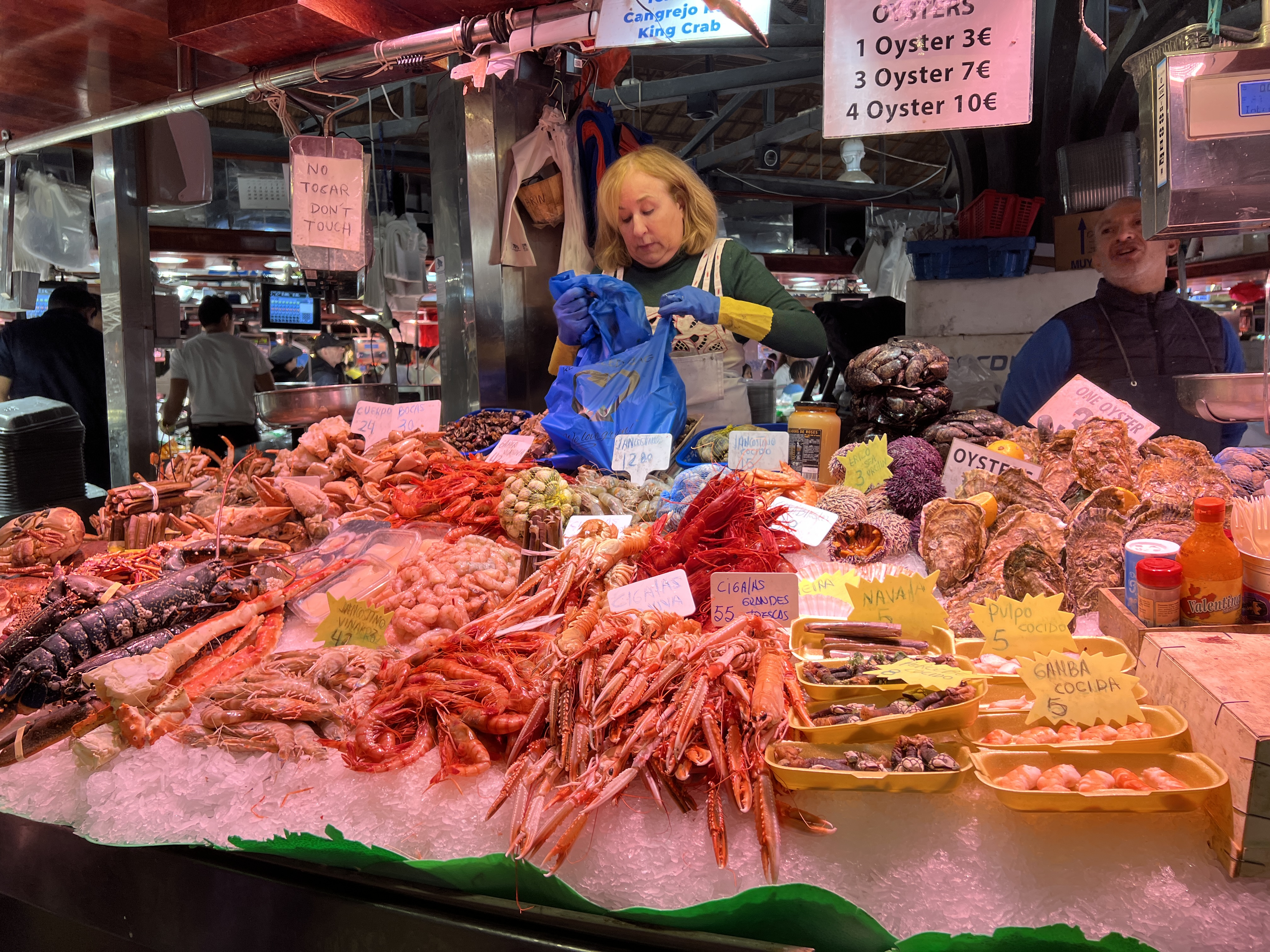
One of the greatest joys of traveling the world—especially as a solo traveler—is the opportunity to lose yourself in a bustling, colorful marketplace. There is no better way to immerse yourself in the daily rhythm of a culture than to walk among the stalls, soaking in the symphony of sights, sounds, and smells. I’ve visited markets on nearly every continent, and each one tells a different story. You’ll find grandmothers selecting the perfect produce, children begging for a sweet treat, vendors passionately describing their wares, and the scent of fresh spices mingling with sizzling street food. It’s a full-body experience that wakes up your senses and grounds you in the authenticity of place.


When I visit a market, I let myself wander slowly, open to discovery. I taste the local snacks, ask questions about unfamiliar ingredients, and watch the unspoken choreography between vendors and customers. The displays themselves are a visual feast—vivid fruits stacked in perfect pyramids, dried herbs spilling out of handwoven baskets, fish on ice shimmering under the morning sun. Sometimes I buy something small, like a handmade kitchen tool or a local pastry, but often, it’s the energy of the space that stays with me more than any souvenir. These marketplaces are not just places to shop—they are the beating heart of the community.


And if a traditional open-air market isn’t available nearby, don’t overlook the local supermarket. I absolutely love exploring large grocery stores in different countries. They’re quiet cultural classrooms, revealing what people eat, how much they pay, what they value, and how food is presented and preserved. From the bakery section to the instant noodles aisle, you’ll spot everything from regional flavors to beloved brands. Even the carts, checkout lanes, and packaging tell a story. So whether you’re standing in a centuries-old souk or a shiny modern supermarket, take your time. Watch, listen, taste, and learn. You’ll come away with far more than groceries—you’ll leave with a deeper understanding of a place and its people.


Monday, May 26, 2025

Between Journeys: Finding Peace at Home


I’ve come to a surprising realization: I’m not planning any trips in the near future, and that actually feels… wonderful.


Looking back, I’ve been away a lot. Over the past year, I was technically out of the country during parts of October and November, half of December, eleven days in January, one day in March, and fifteen more days in April. In between those trips, I was often sick. I even came down with something at the end of my January travels and didn’t feel fully recovered for at least two weeks after I got home. After my April trip, I had a lingering, aggressive cough that stuck around for three solid weeks.


Since I returned home over a month ago, I’ve felt a quiet sense of peace settle in. I haven’t had to think about unpacking only to repack again. No booking hotels or flights, no managing packing lists or blocking out my work schedule. I haven’t had to juggle currency exchanges or map out shore excursions. And I certainly haven’t missed the long TSA lines, waiting to board planes, hauling luggage into and out of overhead bins, or arranging transport to and from cruise ports.


Instead, I can wake up and just be here.


There’s something deeply grounding about having nowhere to go. No countdowns. No checklists. No pressure to do something really interesting every day. Just the simplicity of home, routines, and rhythm.


And honestly, this pause couldn’t have come at a better time. I rarely travel during the summer anyway—it’s just too hot almost everywhere. Plus, with kids out of school, I can work both mornings and evenings, which gives me even more flexibility and flow in my days.


So for now, I’m staying put—and it feels like exactly where I’m meant to be.


Thursday, April 10, 2025

Majorca the Jewel of the Mediterranean

 A Day in Mallorca – April 10, 2025


Mallorca (also spelled Majorca), the crown jewel of Spain’s Balearic Islands, continues to enchant me—this is my fourth visit, and it never loses its magic.


Palma de Mallorca, the capital, can be summed up in five words: chic, elegant, sunny, relaxing, beautiful. Nearly two-thirds of the island’s population lives here, and during spring and summer, it buzzes with energy as cruise ships dock and visitors pour in. Yet somehow, Palma still feels timeless and serene.


Have you heard of the Balearic Islands?


This Mediterranean archipelago—Mallorca, Menorca, Ibiza, Formentera, and Cabrera—is an autonomous region of Spain. Mallorca, the largest, is famous for its dramatic coastline, hidden caves, golden beaches, and over 250 miles of scenic shoreline. Layered with history, the island reveals traces of Roman and Moorish rule, alongside soaring Gothic cathedrals and medieval palaces.


I began my day on the hop-on-hop-off bus, stopping at 18 iconic sights throughout Palma. For several hours, I chose to simply wander—exploring charming neighborhoods, pausing to admire the majestic waterfront cathedral La Seu (which never fails to take my breath away), and striking up spontaneous conversations with locals and fellow travelers.


Fun fact: Mallorca is also known for its exquisite man-made pearls—definitely worth a look, and perhaps a souvenir.


Whether you arrive by sea or land, Mallorca welcomes you with warmth, history, and unmistakable Mediterranean charm. Everyone I spoke with was as smitten with their day in Palma as I was.


And truly, this island keeps calling me back.


Tuesday, March 4, 2025

Advice for First-Time Cruisers to Europe

Advice for First-Time Cruisers to Europe: Embracing History and Culture


For many travelers, their first cruise experience is to the Caribbean, where the focus is often on relaxation, lounging on the beach, strolling around the port, buying souvenirs, and enjoying drinks near the ship. Caribbean cruises are typically about escaping the cold or unwinding in a tropical paradise, rather than immersing oneself in deep historical or cultural exploration.


However, cruising to Europe and other historically rich regions such as Asia, South America, or Oceania offers a completely different experience. These destinations are filled with centuries-old architecture, world-class museums, breathtaking cityscapes, and cultural traditions that have shaped civilizations for millennia. To truly appreciate what these ports have to offer, it’s essential to go beyond the typical cruise mindset of simply stepping off the ship and seeing what’s nearby.


While there’s nothing wrong with choosing to relax on a Mediterranean beach, treating an entire continent as if it were just another Caribbean stop is a missed opportunity. Some travelers may gravitate toward the familiar visiting McDonalds or Starbucks instead of trying local cuisine, or opting for a quick glance at a famous site rather than delving into its history. While this is a personal choice, a little preparation and curiosity can make the experience far more rewarding.


To get the most out of a European cruise, I highly recommend researching each port in advance. Create a list of the top five historical or cultural sites you like to visit, as well as five key facts about the destination. Whether you choose a private tour, a ship-sponsored excursion, or independent exploration, having some background knowledge will deepen your appreciation of what you are seeing. A well-informed local guide can bring history to life, but the experience is even more meaningful when you already have some context.


Destinations Best Explored with a Local Guide


Some places are simply too complex, historically significant, or logistically challenging to fully appreciate without an expert guide. In these locations, investing in a guided tour isn just recommendedΓ’€”it’s essential.


—-Giza & Cairo, Egypt

Seeing the Pyramids, the Sphinx, and the treasures of ancient Egypt is a bucket-list experience, but navigating Cairo can be overwhelming. A local guide provides invaluable insight into the history, culture, and hidden details of these ancient wonders.


—Pompeii & Herculaneum, Italy

These Roman cities were buried in ash when Mount Vesuvius erupted in 79 AD. A knowledgeable archaeologist or historian can help you understand the daily life of ancient Romans and interpret the well-preserved ruins.


—Penguin Rookeries in South America

If you’re visiting penguin colonies in places like the Falkland Islands, Punta Tombo (Argentina), or Magdalena Island (Chile), a naturalist guide ensures you follow conservation guidelines while providing fascinating insights into the penguinsΓ’€™ behaviors and habitats.


—The Acropolis & Athens, Greece

The Parthenon and surrounding structures have centuries of history, mythology, and architectural significance. A professional guide will help you understand their place in Western civilization.


Ephesus, Turkey 

This sprawling ancient city, home to the Library of Celsus and the Great Theatre, is best appreciated with a historian or archaeologist who can bring its ruins to life.


—Petra, Jordan 

The Rose City is an architectural marvel carved into rock, and a guide can explain its Nabatean history, hidden tombs, and religious significance.


—Machu Picchu, Peru

The Incan citadel in the Andes is stunning on its own, but a guide can provide crucial information about its construction, purpose, and rediscovery.


The Great Wall of China

Understanding its vast history, strategic importance, and the different sections worth visiting is best done with a guide.


—Angkor Wat, Cambodia

This massive temple complex has deep religious and historical significance, and a guide helps make sense of its carvings, structures, and layout.


—The Vatican & Sistine Chapel, Italy 

A guided tour is essential to navigate the Vatican Museums efficiently, appreciate Michelangelo’s frescoes, and learn about the historical and religious significance of the artworks.


—Stonehenge, England 

A visit to this ancient monument is enriched by learning about its possible purposes, astronomical alignments, and the Neolithic people who built it.


My personal travel philosophy is simple: I seek out experiences I canΓ’€™t have at home. That means prioritizing historical landmarks, cultural institutions, and local traditions over beaches, bars, and touristy shopping areas. The more you prepare in advance, the richer your memories will be and the more rewarding your journey will feel.


For me, learning about a destination before I arrive is almost as enjoyable as being there. I encourage all first-time European cruisers to embrace that mindset. A cruise to a region with a deep historical and cultural legacy is an incredible opportunity make the most of it!


About the Author


Karla Scott – A Passionate Explorer and Cultural Enthusiast

Karla Scott is a seasoned traveler with over four decades of solo travel experience, visiting more than 100 countries across six continents. Her love for exploration began during a junior year abroad in Normandy, France, where she discovered the thrill and empowerment of solo travel.


Karla’s journeys have taken her from the ancient ruins of Egypt to the bustling markets of India, the serene fjords of Norway, and beyond. With her extensive travel experience, she has honed her expertise in navigating diverse cultures and solo travel strategies, coaching others on cross-cultural communication and teaching English online.


Her mission is to inspire and empower women to embrace the transformative power of solo travel. Whether you’re a first-time traveler or a seasoned adventurer, Karla’s insights offer the guidance and encouragement you need to step boldly into the world.


More recently, Karla has explored the world through solo cruises, journeying across the Mediterranean, the Caribbean, Northern Europe, and beyond.

Saturday, January 11, 2025

Behind the Scenes: A Peek into the Inner Workings of a Cruise Ship

I had the incredible opportunity to take another behind-the-scenes tour of a cruise ship, and it was an eye-opening experience that gave me a new appreciation for the immense coordination and effort required to keep everything running smoothly.


The tour began with a visit to the kitchen galleys, where we saw meal preparation in action. It was fascinating to learn about the meticulous process of menu planning, inventory management, and ordering ingredients to feed thousands of passengers daily. We also observed the dishwashing and garbage disposal areas, where efficiency is key to managing the enormous volume of work.


Next, we went behind the stage in the theater, where we got a glimpse into the world of the ship’s entertainers. Each performer had dozens of costumes, shoes, and accessories carefully organized for their shows. We learned that one performer’s fastest costume change was an astonishing seven seconds! The coordination required between the performers and the backstage crew to pull off flawless transitions is nothing short of extraordinary.


We also explored the ship’s sophisticated lighting, sound, and moving stage operations, which brought the performances to life. The lighting rigs and soundboards are incredibly complex, controlled by skilled technicians who ensure every cue is perfectly timed. The moving stage elements, like lifts and rotating platforms, require precision to keep performers safe while creating spectacular effects. Watching a production from the audience, it’s easy to forget how much expertise and teamwork are happening behind the scenes to create such seamless entertainment.


One of the highlights for me was visiting the laundry facilities. The equipment there was impressive—enormous washers and dryers, automated steamers, and folding machines that could perfectly fold sheets and towels in seconds. The precision and efficiency of the laundry operation left me in awe, and it’s always the part of the tour that amazes me the most.


We also walked through the famous “I-95,” the long corridor that runs the length of the ship, connecting the forward and aft sections. This vital passageway is a hub of activity for crew members, and it’s where much of the ship’s work happens out of sight from passengers. We visited the crew mess, where the crew eats and relaxes, saw the crew ATM, and even got a glimpse of the area where most crew cabins are located.


The behind-the-scenes tour was a fascinating glimpse into the inner workings of the ship, showcasing the incredible teamwork, technology, and creativity that make a seamless cruise experience possible. If you ever get the chance, I highly recommend it—you’ll walk away with a new level of admiration for the crew, the performers, and the ship’s operations!

Hotels, Not Airbnb

  Hotels, Not Airbnb In an age in which Airbnb has become almost synonymous with modern travel, my own preference remains decidedly old-fash...