Showing posts with label Hungary. Show all posts

Tuesday, October 29, 2024

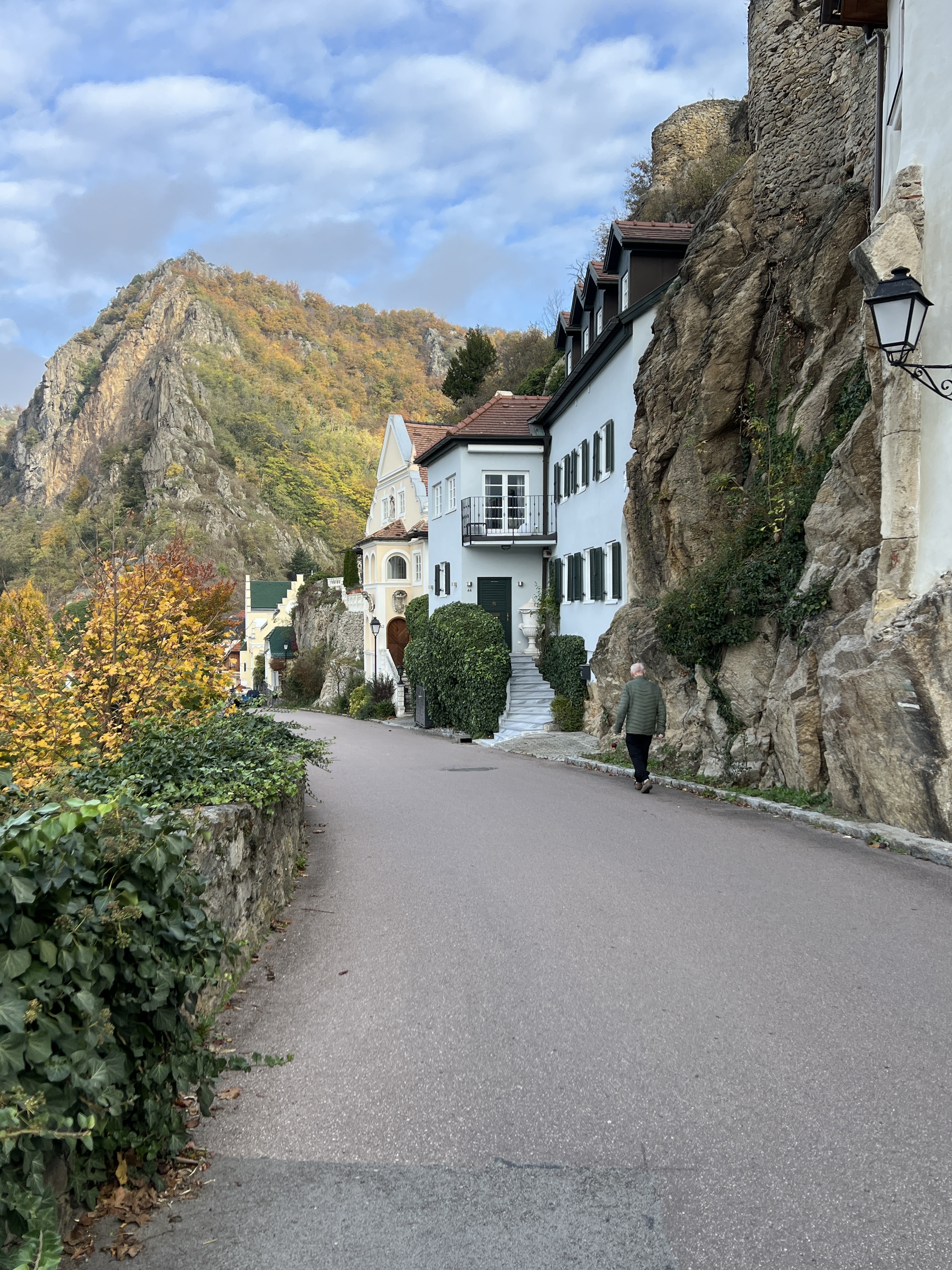
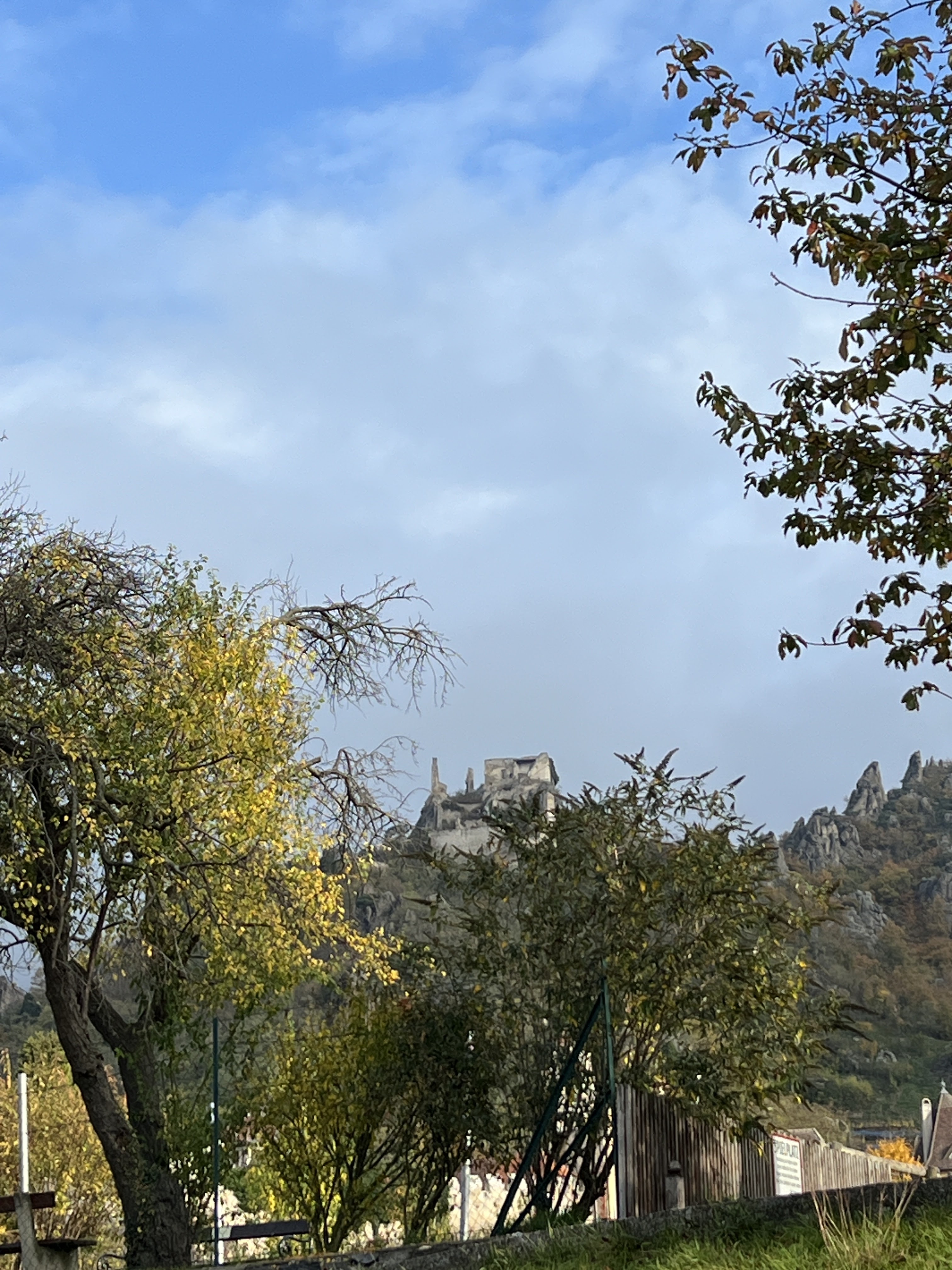
Dürnstein, Austria, is a charming medieval village


 Dürnstein, Austria, is a charming medieval village nestled along the scenic Danube River in the picturesque Wachau Valley, a UNESCO World Heritage Site. This small town, with a population of around 900, is famous for its well-preserved medieval architecture, narrow cobblestone streets, and the striking blue Baroque tower of its abbey, built on medieval foundations. Dürnstein’s history is steeped in legend, most famously as the place where King Richard the Lionheart was held captive in 1192 by Duke Leopold V of Austria after the Third Crusade, until his loyal minstrel Blondel reportedly found him by singing near his prison. The town’s economy today thrives on tourism, wine production, and apricot orchards, making it a celebrated destination in the Wachau Valley.


Exploring Dürnstein felt like stepping back in time. Without a map or much advance research, I wandered the streets, captivated by the timeless beauty and rich history. 


Now, we’ll sail on to Melk, where we’ll visit its famous abbey. The journey will take us through locks along the Danube, with more beautiful scenery in the Wachau Valley ahead. Our cruise Director will provide helpful commentary along the way.

Monday, October 28, 2024

House of Terror Museum in Budapest

My visit to the House of Terror Museum in Budapest last week left a profound impact on me. Today, as I explored the Museum of Communism in Prague, those same feelings of angst, sadness, and confusion resurfaced, bringing a renewed awareness of the difficult history both nations endured.


Here is a description of the house of
House of Terror Museum in Budapest Hungary: written October 28, 2024
The House of Terror Museum in Budapest is an evocative and chilling testament to Hungary’s turbulent 20th-century history, highlighting the brutal regimes that shaped the nation. Situated on Andrássy Avenue in the heart of the city, this imposing museum occupies a former headquarters of both the Nazi-aligned Arrow Cross Party and later the notorious Communist State Security services. The building itself, with its strikingly modern “TERROR” rooftop installation casting shadows across the façade, sets the tone for what lies inside.
Through immersive exhibits, visitors encounter personal stories, historical footage, and artifacts that document the lives shattered by oppressive forces. Each floor of the museum delves into the terrors experienced under both fascist and then communist regimes, showing the imprisonment, interrogation, and often death faced by those deemed enemies of the state. The basement, preserved as a prison area, includes recreated cells where detainees endured unimaginable conditions.
Highlights of the museum include the “Hall of Tears,” which memorializes the victims of these regimes, and an entire section dedicated to Hungary’s 1956 Revolution, a courageous but tragic attempt to break free from Soviet control. This museum isn’t just about Hungary’s history—it’s a powerful, universal reminder of the importance of freedom and resilience. Through its uncompromising presentation, the House of Terror challenges visitors to confront and reflect on these dark chapters, creating an experience that’s both harrowing and deeply moving.
The House of Terror Museum is a powerful reminder of the horrors that individuals endured under fascist and communist regimes, enduring surveillance, oppression, and persecution that stripped people of their dignity and lives. Walking through its haunting halls and reflecting on the fear and suffering that so many experienced, I’m filled with gratitude for the freedoms I enjoy today.
———-
Two days later, this place is still haunting me.
Living in a country where freedom of expression, press, religion, and association are safeguarded feels like a privilege I might have otherwise taken for granted. I’m grateful to live in a society where equal opportunity is a fundamental right, where individual voices can be raised without fear, and where justice and protections exist for all citizens. Standing in this museum, surrounded by the echoes of those who lived under constant fear, I’m reminded that these freedoms aren’t universal and that they are something truly worth cherishing and protecting.
BTW—I voted by mail before I left home for my trip!

Sunday, October 13, 2024

Are You Prepared For Foreign Currency Conversions?

 You Should Always Prepare for Currency Conversions Before Traveling


While credit cards are widely accepted and often required for payment around the world, it’s still a good idea to carry some local currency and familiarize yourself with exchange rates before you travel. Personally, I’ve made a habit of creating wallet-sized conversion charts for quick reference on the go.


For my upcoming Danube River cruise, I’ve finally ordered currency for both Hungary and the Czech Republic. Although both countries are part of the EU, they continue to use their own national currencies.


5,000 Hungarian Forints equals $13.52.

500 Czech Korunas equals $21.46.


To make currency conversions easier while traveling, I always create a simple arithmetic mnemonic:


For Hungary, I’ll remove three zeros and then multiply the remaining number by about three to estimate the price in US dollars.

For the Czech Republic, I’ll remove two zeros and multiply by four.


In Hungary, the local currency is still the primary method of payment. While some shops and restaurants in central Budapest accept euros and U.S. dollars, they often come with higher exchange rates.


In the Czech Republic, foreign currencies are rarely accepted, except in duty-free shops. A few supermarkets, hotels, and businesses may take euros, but these options are quite limited.


Sample Prices in Budapest, Hungary (October 2024)

Exchange rate: 1 HUF = 0.0027253 USD


Bottle of water: 200-300 HUF ($0.55-$0.82)

Pastry in a pastry shop: 350-500 HUF ($0.95-$1.36)

Candy bar: 250-350 HUF ($0.68-$0.95)

Breakfast in an average restaurant: 1,500-2,000 HUF ($4.08-$5.45)

Lunch in an average restaurant: 2,500-3,500 HUF ($6.81-$9.54)

Dinner in an average restaurant: 4,000-6,000 HUF ($10.91-$16.36)

Metro ticket (one-way): 350 HUF ($0.95)

Taxi ride (15 minutes): 3,000-4,500 HUF ($8.18-$12.27)

Haircut: 4,000-6,000 HUF ($10.91-$16.36)

Goulash at a local café: 1,500-2,000 HUF ($4.08-$5.45)

Cup of coffee at a coffee shop: 600-800 HUF ($1.64-$2.18)

Movie theater ticket: 1,500-2,500 HUF ($4.08-$6.81)

Simple doctor’s visit: 10,000-15,000 HUF ($27.27-$40.91)

Rent for a two-bedroom apartment: 220,000-350,000 HUF ($600-$954)

Electricity bill for an apartment: 10,000-20,000 HUF ($27.27-$54.54)


Sample Prices in Prague, Czech Republic (October 2024)

Exchange rate: 1 CZK = 0.0432776 USD


Bottle of water (supermarket): 15 CZK (~$0.65)

Pastry in a bakery: 30-50 CZK (~$1.30-$2.17)

Candy bar: 25-35 CZK (~$1.08-$1.52)

Breakfast in an average restaurant: 100-130 CZK (~$4.33-$5.63)

Lunch in an average restaurant: 150-250 CZK (~$6.50-$10.82)

Dinner in an average restaurant: 300-500 CZK (~$12.99-$21.66)

Metro ticket (90-minute): 40 CZK (~$1.73)

Taxi ride (15 minutes): 300-350 CZK (~$12.99-$15.15)

Haircut (men’s): 300-500 CZK (~$12.99-$21.66)

Goulash: 150 CZK (~$6.50)

Coffee (café): 56-70 CZK (~$2.42-$3.03)

Movie theater ticket: 250 CZK (~$10.82)

Simple doctor’s visit: 800-1,000 CZK (~$34.62-$43.28)

Rent for a two-bedroom apartment (city center): 47,325 CZK (~$2,048.35)

Electricity bill for an apartment: 2,500-3,000 CZK (~$108.19-$129.83)


Prices may vary slightly depending on location and establishment, but this provides a good overview of typical costs in Budapest and Prague.

Packing for a long overseas trip

Packing for a Long Overseas Trip: What to Do Before You Even Open Your Suitcase Packing for an overseas trip of two weeks or longer is about...