“Human rights are universal and indivisible.”
Human freedom is also indivisible: if it is denied to anyone in the world, it is therefore denied, indirectly, to all people. This is why we cannot remain silent in the face of evil or violence; silence merely encourages them.”
——-VÁCLAV HAVEL, the first president of the newly liberated Czechoslovakia who has been previously imprisoned for his anti-Soviet activism. 1989
While some other travelers in my group visited the Terezin concentration camp, I decided to learn more about Czechoslovakia’s tumultuous history during the 20th century. I arrived at 5:00 PM and the manager alerted me at 7:50 PM that the museum would close in 10 minutes. Of note, I also spent three hours at the museum of terror in Budapest where I learned about the impact of the brutal Nazi and Soviet regimes on Hungary.
Prior to World War II, Czechoslovakia’s population was roughly one-third Czech and Slovak, one-third German, and one-third Jewish. By the war’s end, the Jewish population had largely been deported and murdered in the Holocaust, while the German population faced expulsion as retribution for Nazi occupation and brutality. This left a population primarily composed of native Czechs and Slovaks.
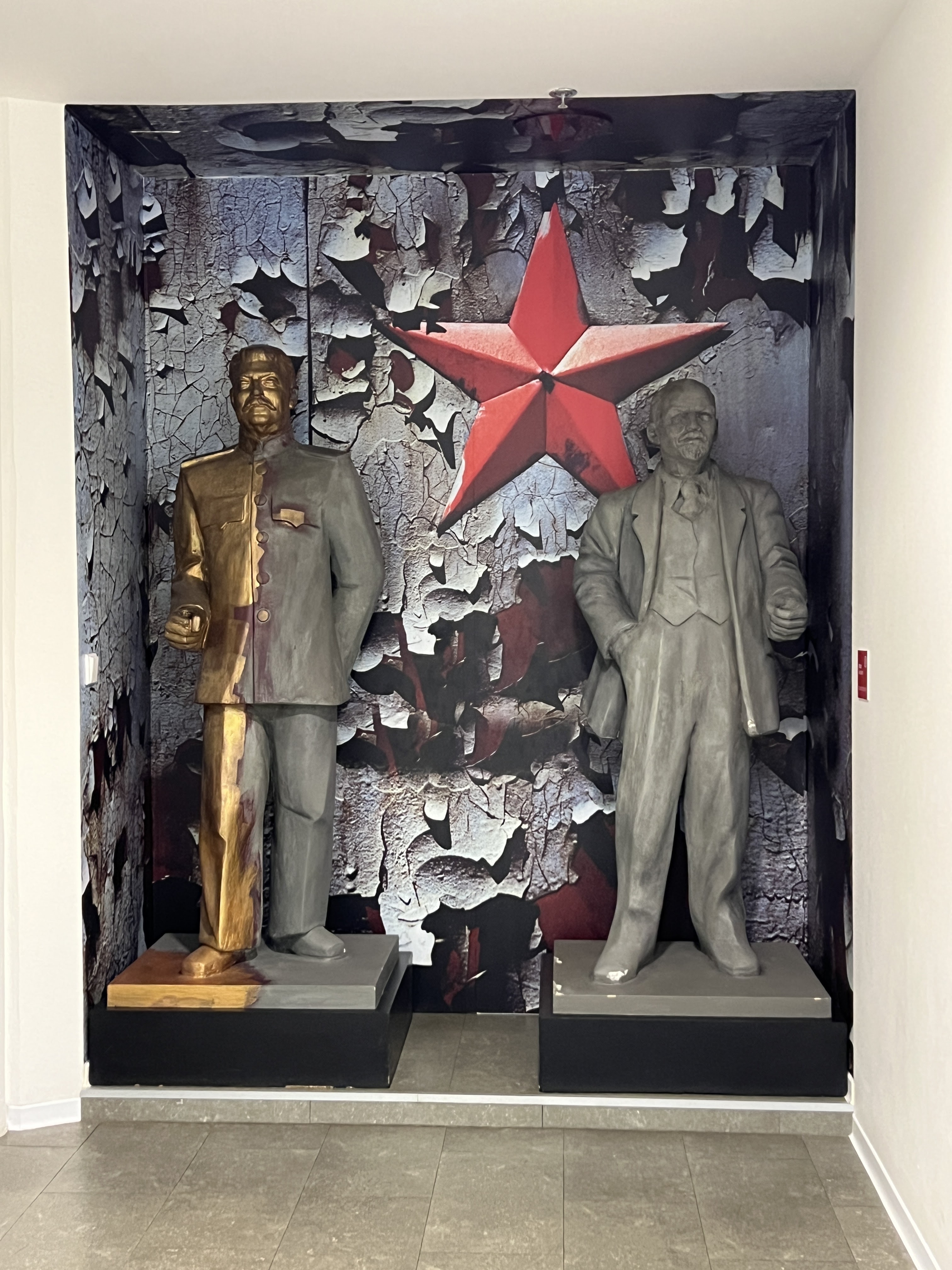
I went to the Museum of communism in Prague, Czech Republic. Here is a description of the museum from its website:
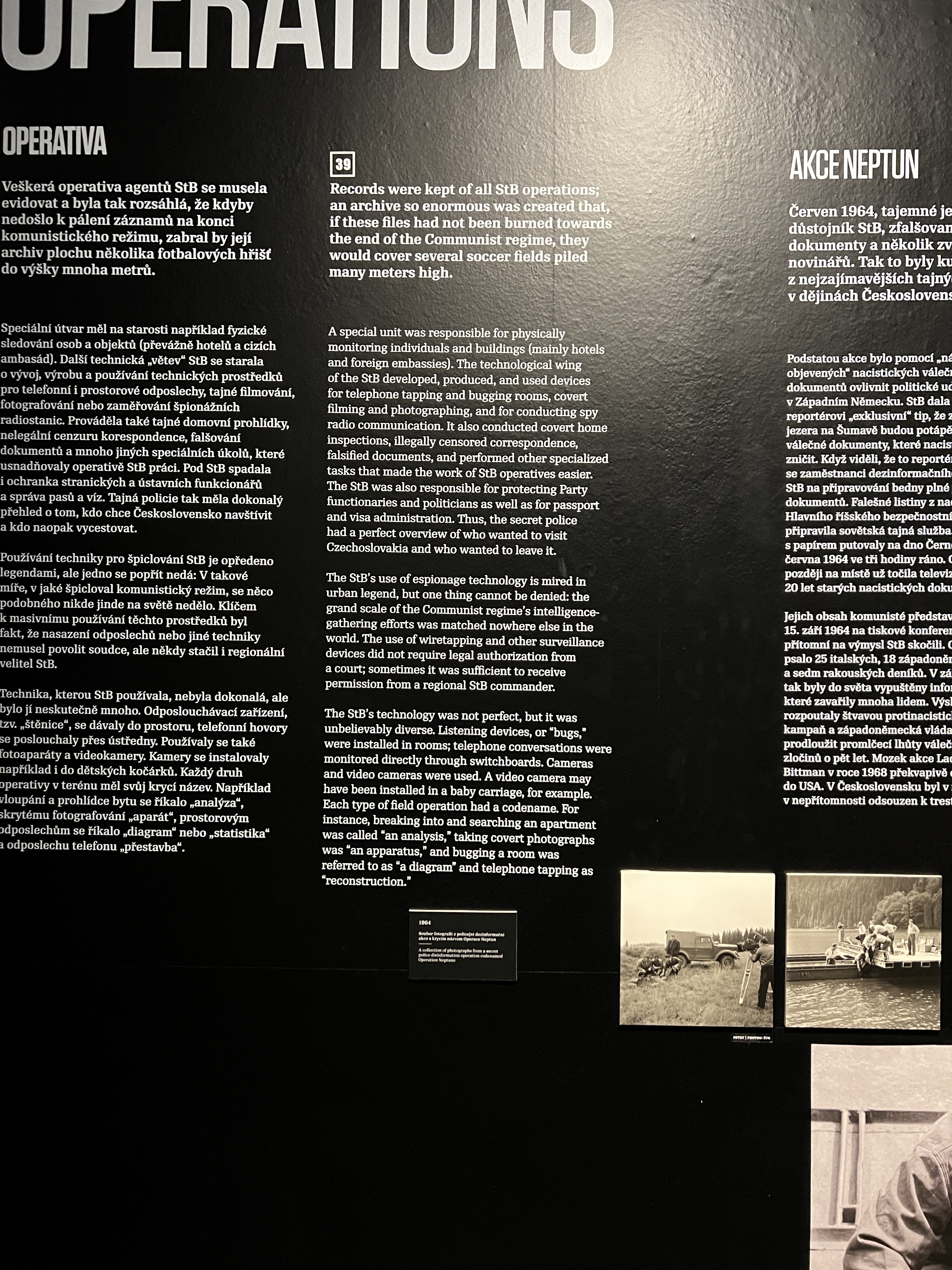
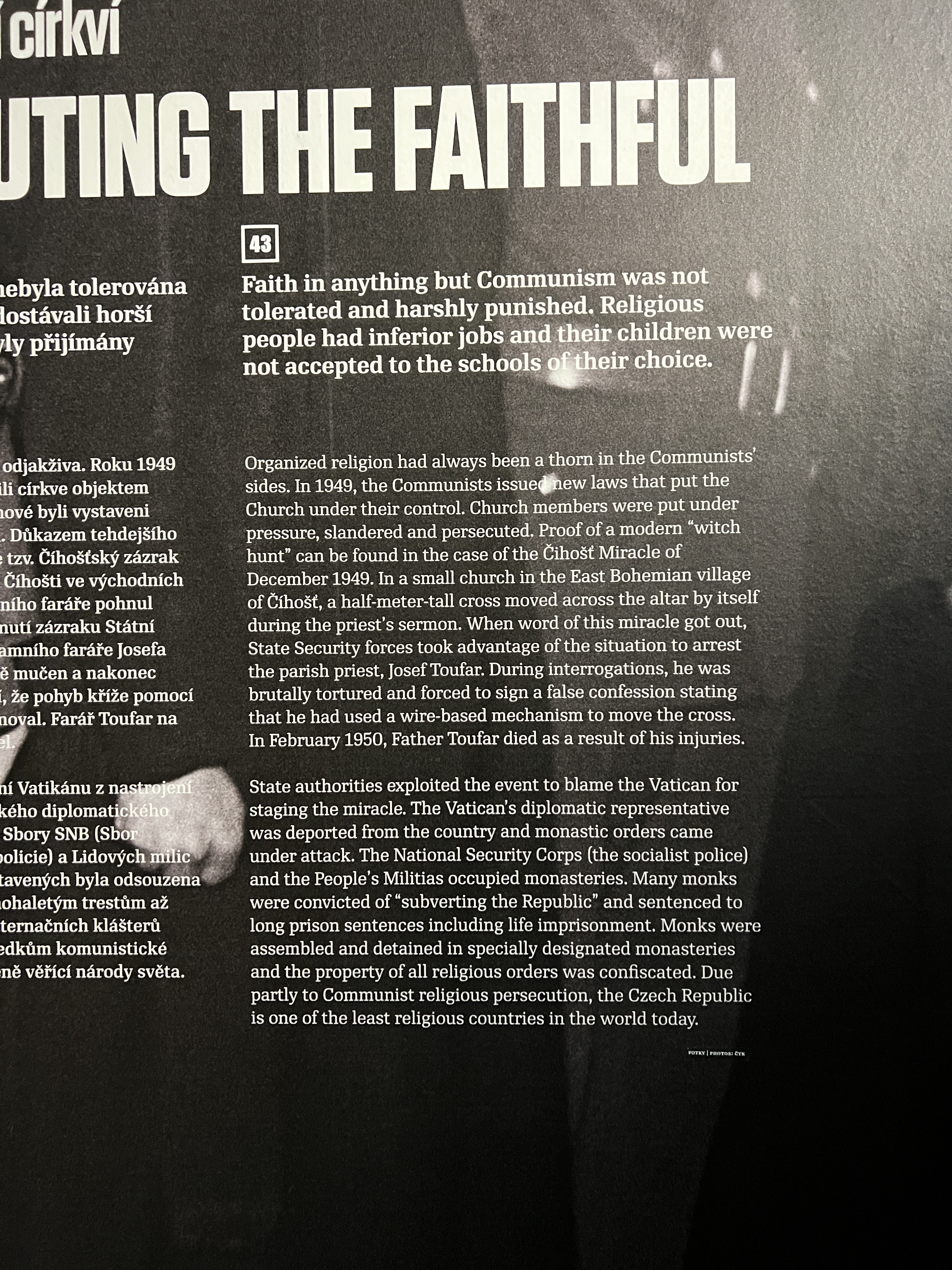
View of the following aspects of life in Communist-era Czechoslovakia: daily life, politics, history, sports, economics, education, art (specifically Socialist Realism), propaganda in the media, the People's Militias, the army, the police (including the secret police, the StB), censorship, and courts and other institutes of repression, including show trials and political labor camps during the Stalinist era. It focuses in particular on the totalitarian regime that ruled the country from the February putsch in 1948 until the Velvet Revolution in 1989.
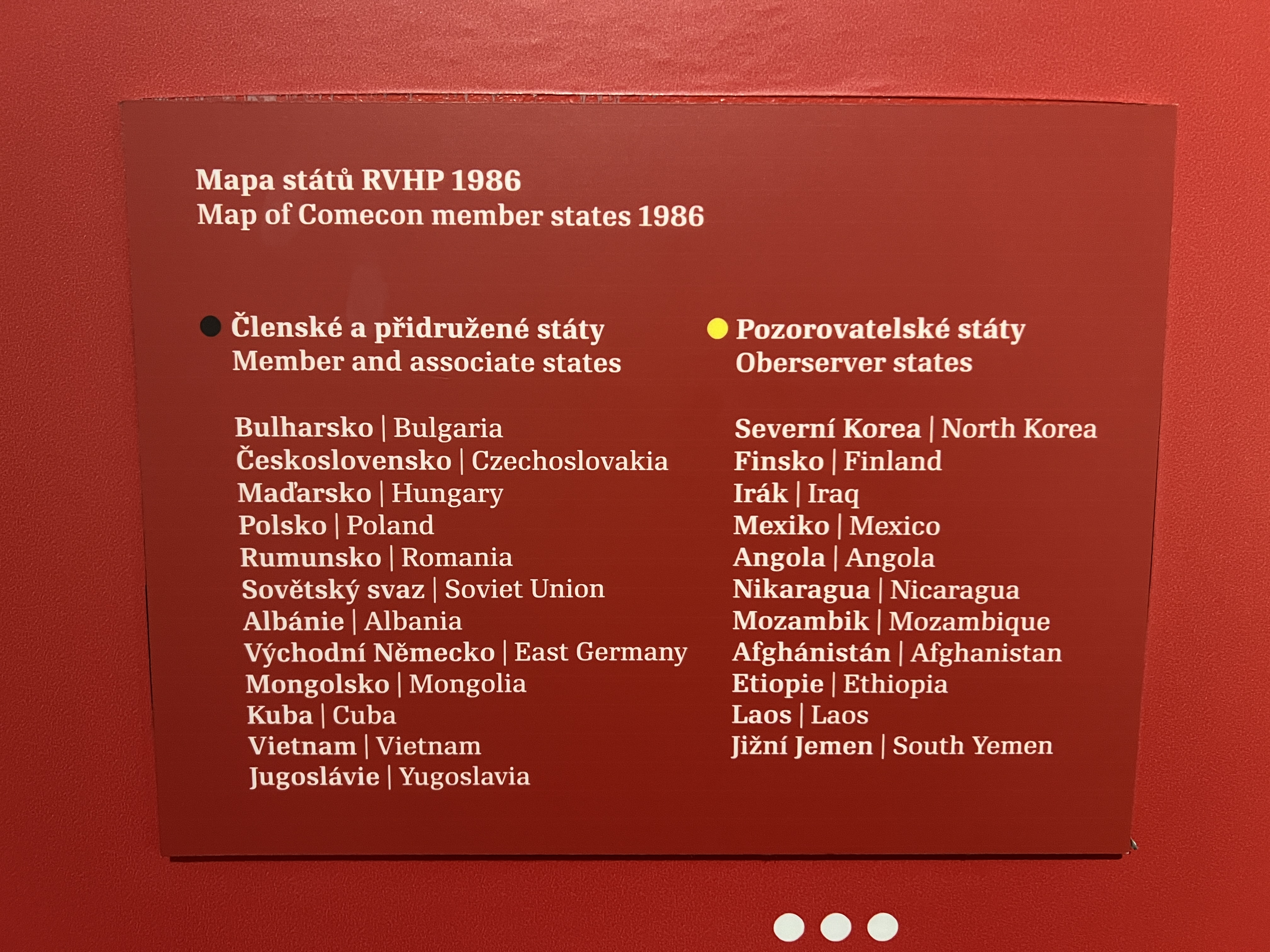
Housed in a space of nearly 1,500 m2, the museum provides visitors with an authentic feel of the era that is enhanced by the incorporation of short videos, posters, and artifacts. The exhibit includes interestingly designed spaces, where visitors can walk through mock-ups of a shock worker's workshop, a school classroom, a child's bedroom, and an interrogation room. We have also selected interesting items from our vast collection of materials that illustrate what daily life under Communism was like. Everything is described on 62 panels divided into thematic sections, which are enriched with a great amount of photographic material from the Archive of the Czech News Agency, the Security Services Archive, the Archive of the Association of Forced Military Camp Laborers, and the personal collections of leading Czech photographers.
Czechoslovakia’s experience during World War II and the subsequent Soviet occupation was marked by trauma, occupation, and political upheaval. After the Munich Agreement of 1938 allowed Nazi Germany to annex the Sudetenland (which was land on the border of Czechoslovakia with lots of German ) Hitler quickly escalated his ambitions. In March 1939, German forces invaded and occupied the remaining parts of Czechoslovakia, creating the Protectorate of Bohemia and Moravia under strict Nazi control. During this time, resistance was brutally suppressed, and many citizens were imprisoned, sent to concentration camps, or executed, including members of the Czechoslovak resistance and Jewish communities. The assassination of Nazi leader Reinhard Heydrich in 1942 led to horrific reprisals, including the complete destruction of the village of Lidice.
Following the Allied victory in 1945, Soviet troops entered Czechoslovakia, which then fell within the Soviet sphere of influence. The communist coup of 1948 brought Czechoslovakia fully under Soviet-style rule, creating a tightly controlled, one-party state. Life under Soviet-backed communist rule was marked by censorship, restrictions on freedom, and widespread surveillance. The government operated secret police, silencing any form of dissent and promoting a culture of fear, in which even family members could be compelled to report one another. The suppression reached its peak during the Prague Spring of 1968, when Soviet tanks invaded to crush reform movements aimed at creating “socialism with a human face.” The years that followed, known as “Normalization,” saw further repression, purges, and hardship for those who had hoped for a more liberal society. For decades, Czechoslovakians lived under the constant watch of the Soviet-backed state, enduring restrictions on expression, movement, and individual freedoms until the Velvet Revolution of 1989 finally ended Soviet dominance.